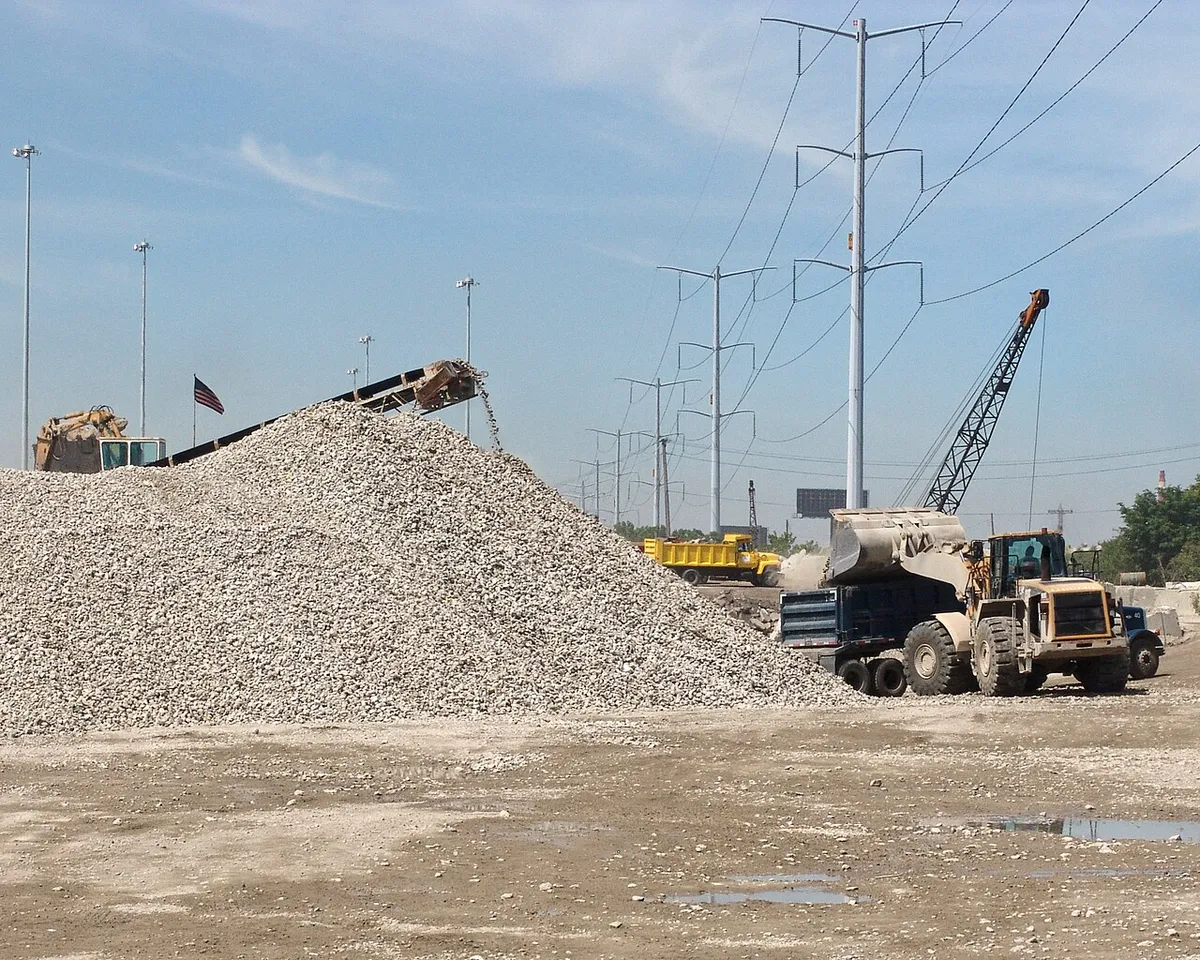
Crushed Concrete Driveway Cost in Forney
Dense-graded crushed concrete sells for about $9 to $25 a ton at the yard and roughly $11 to $35 a cubic yard, ThePricer's 2026 guide reports, with a delivered residential truckload around $250 to $800. Installed driveways, meaning material, delivery, basic grading and compaction, run about $1.25 to $3 per square foot.
CalculateGravel's 2026 survey lists recycled concrete at $12 to $25 a ton delivered against $25 to $45 for #57 crushed limestone, so the base is where the saving lands. Excavation of the clay and fabric cost the same whatever stone goes on top; see the Forney cost guide for those lines.
Crushed Concrete Next to Limestone
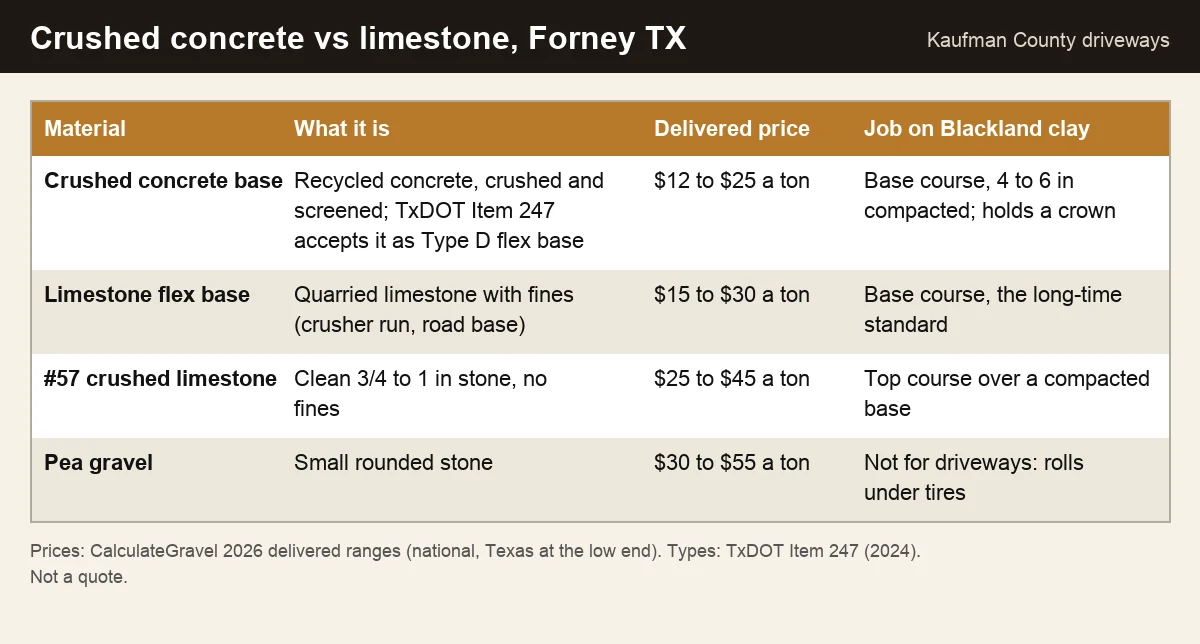
TxDOT's Item 247 flexible base specification (2024 edition) defines Type A as crushed stone from a single quarried source and Type D as "Type A material or crushed concrete." In other words, the state builds road base out of the same recycled material sold for driveways, as long as it meets the gradation and plasticity limits.
For a home drive the practical differences are looks and dust. Crushed concrete is gray-white with mixed particle shapes; limestone is more even. Both compact hard on clay when placed in lifts and rolled.
Building a Crushed Concrete Drive on Forney Clay
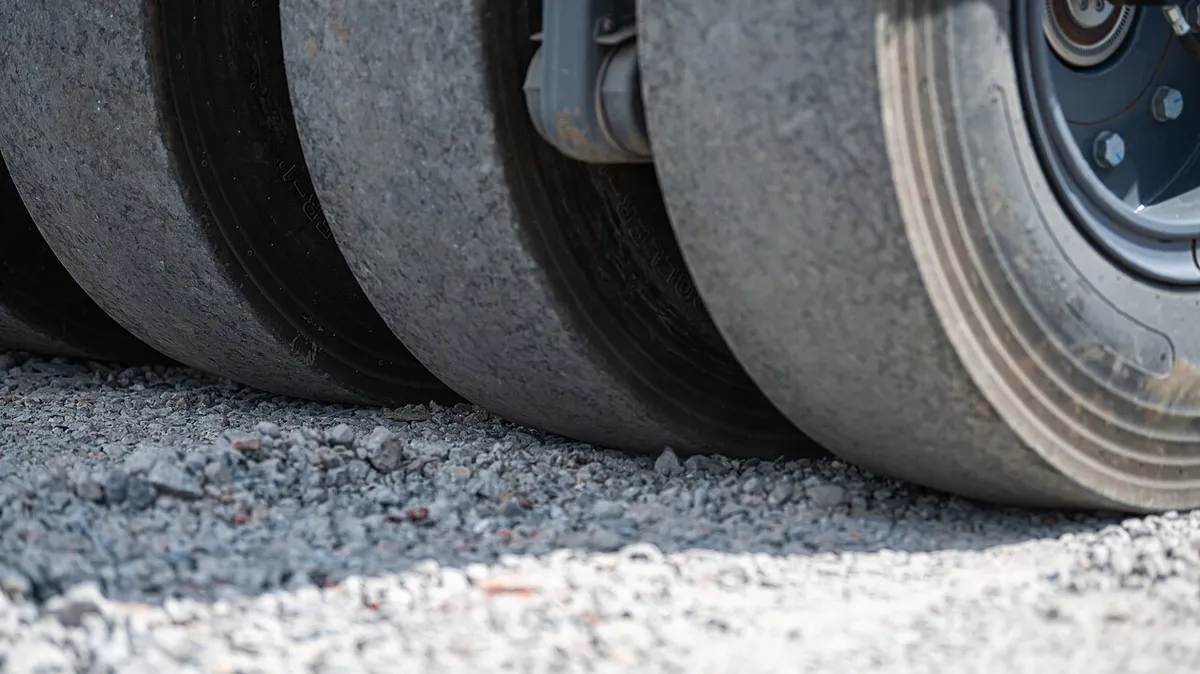
The build is the same as any gravel driveway installation: strip the topsoil, shape the clay to shed water, lay woven fabric, then place the crushed concrete in 3 to 4 inch lifts and roll each one, to 4 to 6 inches total. The cement fines bind as they are wetted and rolled, which helps the drive hold its crown.
On top, most Forney owners choose 2 to 3 inches of crushed limestone or #57 stone for a cleaner look, though a finer 3/8 inch crushed concrete also works as a top-dress.
Where Crushed Concrete Fits, and Where It Doesn't
It suits base courses, long rural lanes where cost per foot adds up, RV and parking pads, and construction entrances. It is a weaker choice where the drive is a showpiece, beside a pool or garden bed (the fines are alkaline and can wash onto plantings), or when an HOA requires a specific stone.
Ask for screened material. Unscreened loads are cheaper but can include rebar ends and brick that work up to the surface and puncture tires.